Table of contents
- When Excel reaches its limits
- Typical problems in businesses
- What a web application can improve
- Examples of digitized processes
- Why dashboards help teams
- How to move step by step
- Conclusion
Replacing Excel in your business: when is a web application worth it?
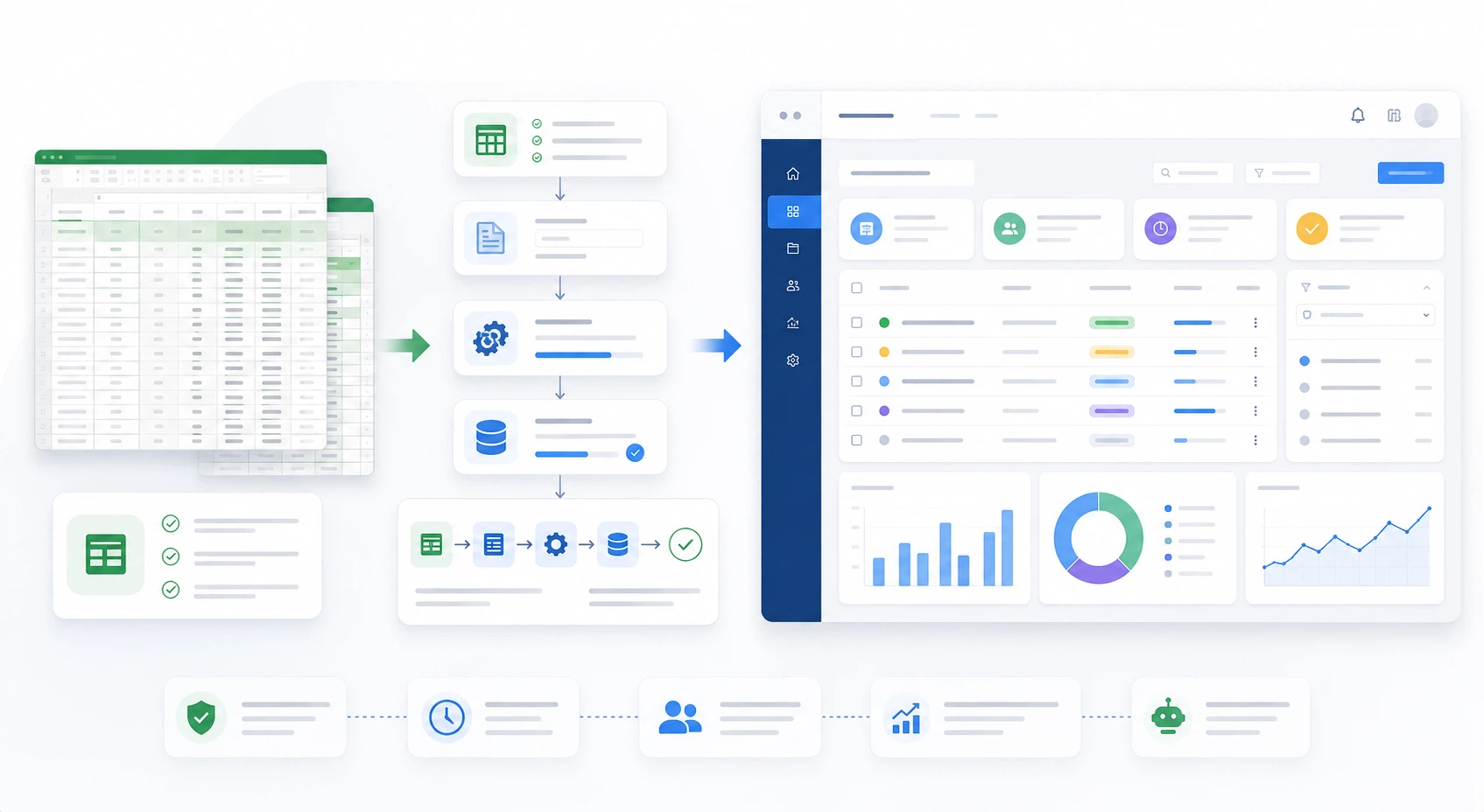
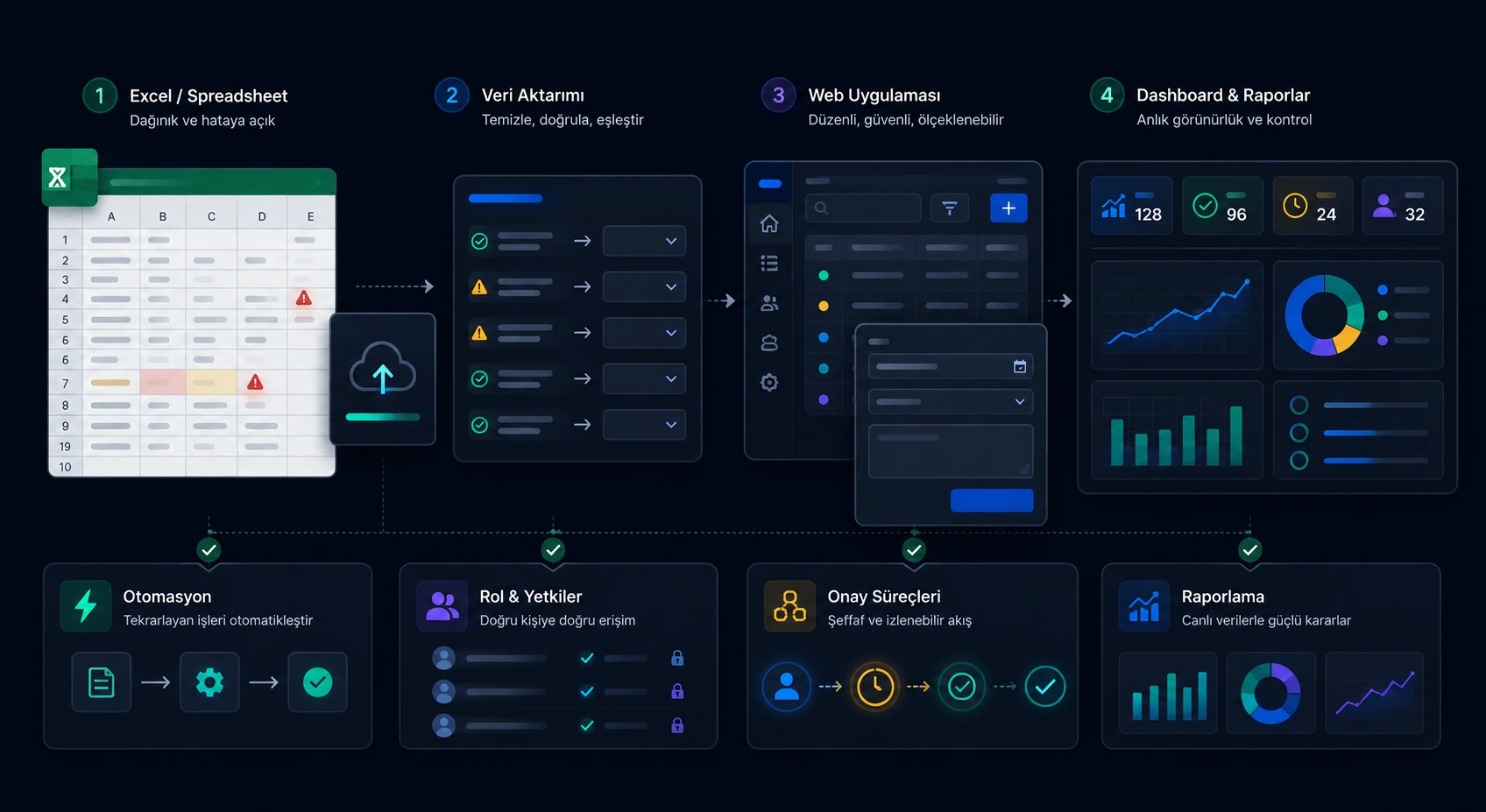
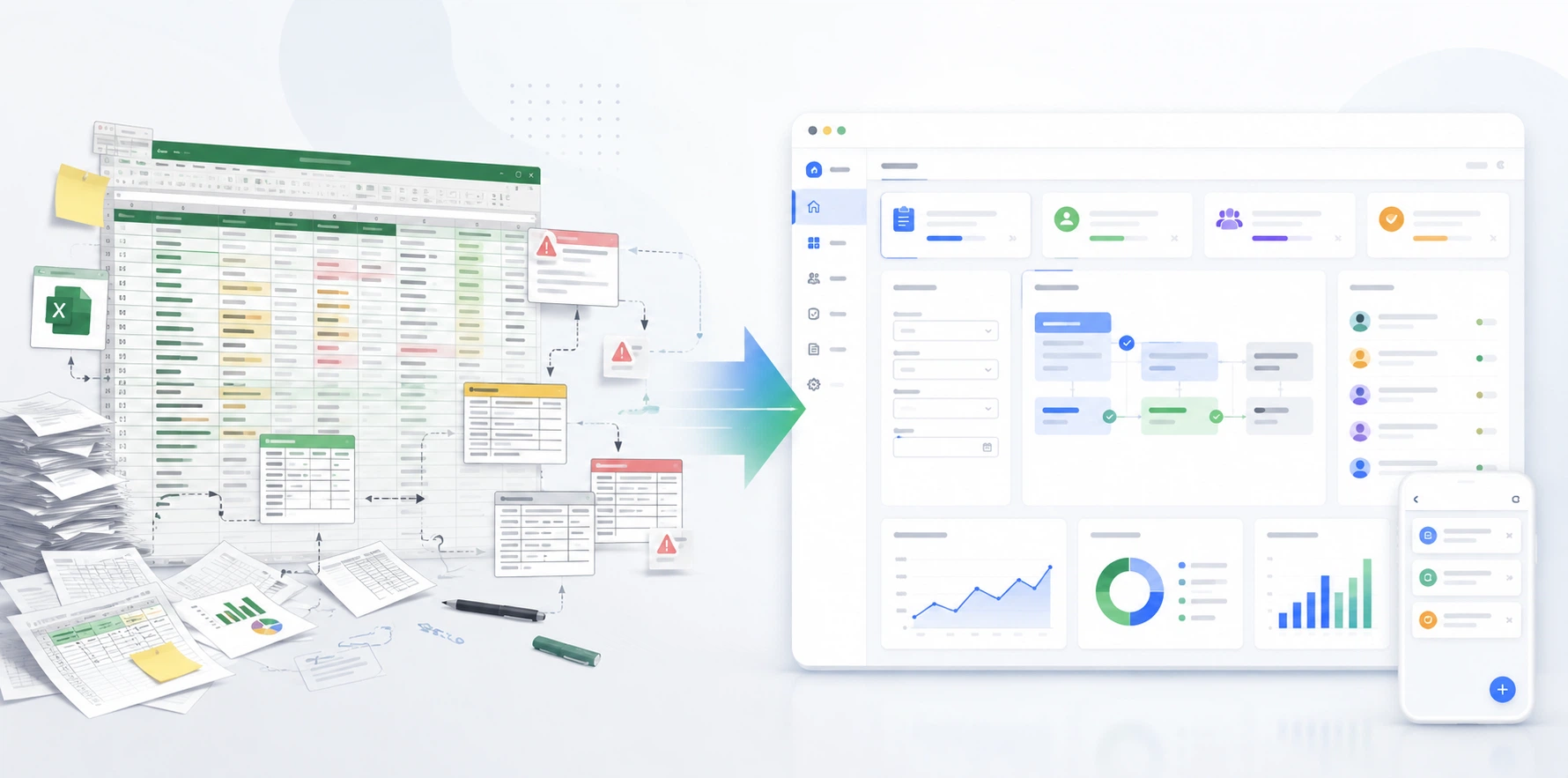
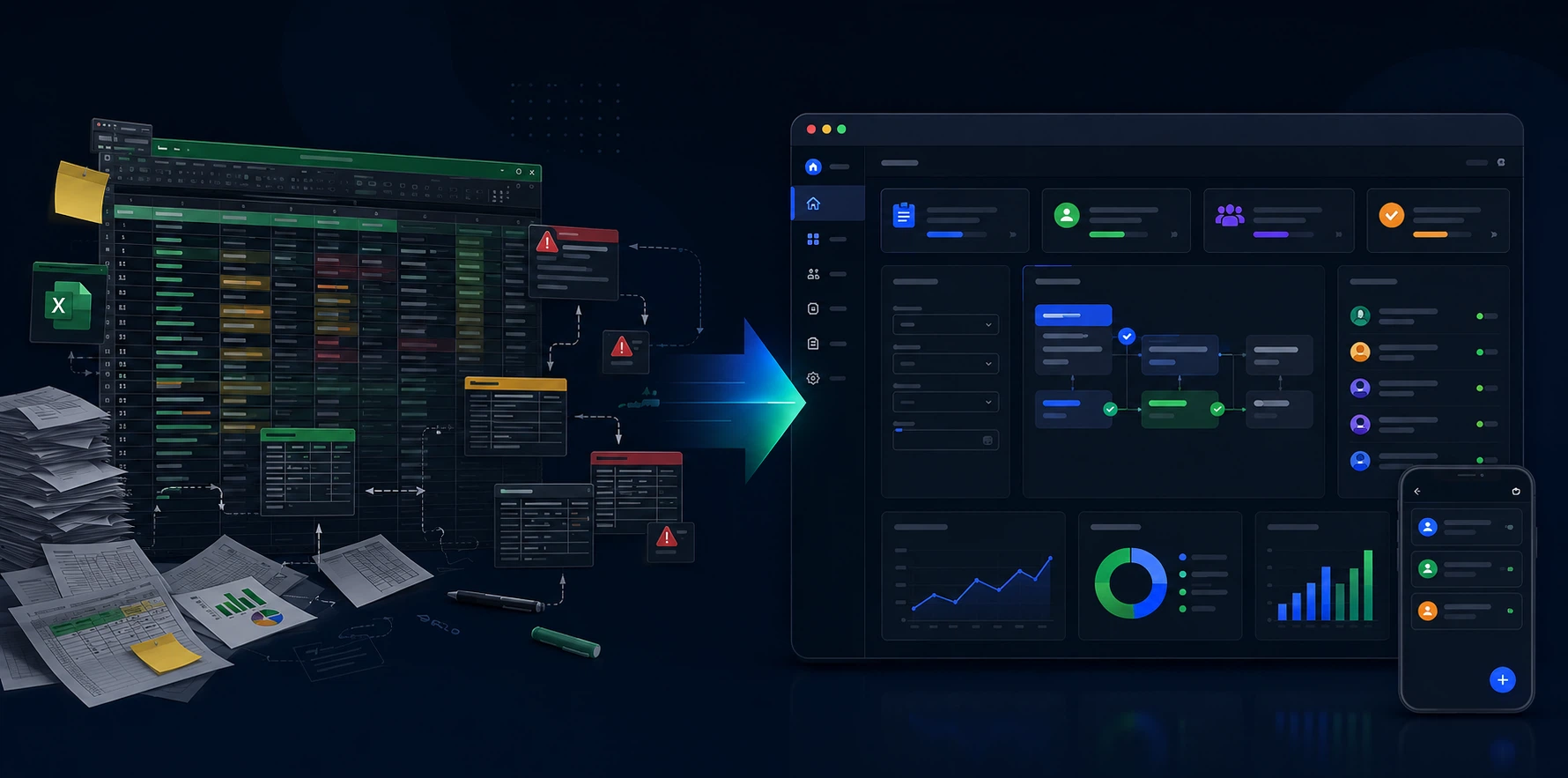
Excel is powerful, but it is not ideal for every business process. When several people work on the same data, errors appear, information is duplicated or status updates become unclear, a web application can make daily work more structured.
When Excel reaches its limits
When Excel reaches its limits is important because it influences how clearly a business can present its offer, manage internal work and make digital processes understandable for customers and employees.
In practice, small and medium-sized businesses should not only ask what looks modern. They should ask whether the solution loads quickly, is easy to maintain, supports the team and makes the next operational step easier.
BayPass reviews this topic with a practical mindset. The goal is to identify what creates value now, what should be prepared technically and what can be extended later when the business actually needs it.
This keeps the project realistic. Instead of building unnecessary features, the work focuses on structure, performance, clear content, useful automation and a reliable basis for future improvements.
It is also worth thinking about future maintenance. A solution remains useful only when content changes, technical updates and small extensions can be handled without excessive effort.
For budget planning, it helps to separate must-have features from later improvements. Not everything has to be built immediately; some functions can be prepared and added later.
Clarifying this early reduces misunderstandings. The project becomes more transparent, decisions are easier to understand and the future collaboration becomes more predictable.
Typical problems in businesses
Typical problems in businesses is important because it influences how clearly a business can present its offer, manage internal work and make digital processes understandable for customers and employees.
In practice, small and medium-sized businesses should not only ask what looks modern. They should ask whether the solution loads quickly, is easy to maintain, supports the team and makes the next operational step easier.
BayPass reviews this topic with a practical mindset. The goal is to identify what creates value now, what should be prepared technically and what can be extended later when the business actually needs it.
This keeps the project realistic. Instead of building unnecessary features, the work focuses on structure, performance, clear content, useful automation and a reliable basis for future improvements.
It is also worth thinking about future maintenance. A solution remains useful only when content changes, technical updates and small extensions can be handled without excessive effort.
For budget planning, it helps to separate must-have features from later improvements. Not everything has to be built immediately; some functions can be prepared and added later.
Clarifying this early reduces misunderstandings. The project becomes more transparent, decisions are easier to understand and the future collaboration becomes more predictable.
What a web application can improve
What a web application can improve is important because it influences how clearly a business can present its offer, manage internal work and make digital processes understandable for customers and employees.
In practice, small and medium-sized businesses should not only ask what looks modern. They should ask whether the solution loads quickly, is easy to maintain, supports the team and makes the next operational step easier.
BayPass reviews this topic with a practical mindset. The goal is to identify what creates value now, what should be prepared technically and what can be extended later when the business actually needs it.
This keeps the project realistic. Instead of building unnecessary features, the work focuses on structure, performance, clear content, useful automation and a reliable basis for future improvements.
It is also worth thinking about future maintenance. A solution remains useful only when content changes, technical updates and small extensions can be handled without excessive effort.
For budget planning, it helps to separate must-have features from later improvements. Not everything has to be built immediately; some functions can be prepared and added later.
Clarifying this early reduces misunderstandings. The project becomes more transparent, decisions are easier to understand and the future collaboration becomes more predictable.
Examples of digitized processes
Examples of digitized processes is important because it influences how clearly a business can present its offer, manage internal work and make digital processes understandable for customers and employees.
In practice, small and medium-sized businesses should not only ask what looks modern. They should ask whether the solution loads quickly, is easy to maintain, supports the team and makes the next operational step easier.
BayPass reviews this topic with a practical mindset. The goal is to identify what creates value now, what should be prepared technically and what can be extended later when the business actually needs it.
This keeps the project realistic. Instead of building unnecessary features, the work focuses on structure, performance, clear content, useful automation and a reliable basis for future improvements.
It is also worth thinking about future maintenance. A solution remains useful only when content changes, technical updates and small extensions can be handled without excessive effort.
For budget planning, it helps to separate must-have features from later improvements. Not everything has to be built immediately; some functions can be prepared and added later.
Clarifying this early reduces misunderstandings. The project becomes more transparent, decisions are easier to understand and the future collaboration becomes more predictable.
Why dashboards help teams
Why dashboards help teams is important because it influences how clearly a business can present its offer, manage internal work and make digital processes understandable for customers and employees.
In practice, small and medium-sized businesses should not only ask what looks modern. They should ask whether the solution loads quickly, is easy to maintain, supports the team and makes the next operational step easier.
BayPass reviews this topic with a practical mindset. The goal is to identify what creates value now, what should be prepared technically and what can be extended later when the business actually needs it.
This keeps the project realistic. Instead of building unnecessary features, the work focuses on structure, performance, clear content, useful automation and a reliable basis for future improvements.
It is also worth thinking about future maintenance. A solution remains useful only when content changes, technical updates and small extensions can be handled without excessive effort.
For budget planning, it helps to separate must-have features from later improvements. Not everything has to be built immediately; some functions can be prepared and added later.
Clarifying this early reduces misunderstandings. The project becomes more transparent, decisions are easier to understand and the future collaboration becomes more predictable.
How to move step by step
How to move step by step is important because it influences how clearly a business can present its offer, manage internal work and make digital processes understandable for customers and employees.
In practice, small and medium-sized businesses should not only ask what looks modern. They should ask whether the solution loads quickly, is easy to maintain, supports the team and makes the next operational step easier.
BayPass reviews this topic with a practical mindset. The goal is to identify what creates value now, what should be prepared technically and what can be extended later when the business actually needs it.
This keeps the project realistic. Instead of building unnecessary features, the work focuses on structure, performance, clear content, useful automation and a reliable basis for future improvements.
It is also worth thinking about future maintenance. A solution remains useful only when content changes, technical updates and small extensions can be handled without excessive effort.
For budget planning, it helps to separate must-have features from later improvements. Not everything has to be built immediately; some functions can be prepared and added later.
Clarifying this early reduces misunderstandings. The project becomes more transparent, decisions are easier to understand and the future collaboration becomes more predictable.
Conclusion
The conclusion is not that every business needs the largest possible solution. What matters is a clear decision based on goals, budget, current processes and the expected practical benefit.
For small and medium-sized businesses, a step-by-step approach is often the safest path. A clean technical foundation can be extended later without forcing unnecessary complexity at the beginning.
BayPass focuses on pragmatic solutions: understandable planning, realistic priorities and implementation that helps the business in everyday work rather than only looking impressive in a presentation.
The next practical step is an honest review: what already works, where friction appears and which improvement would create the most useful short-term benefit for the business?